How Much Does it Cost to Run Central Heating Per Hour in The UK?
Living in the UK, homeowners must understand how much gas central heating costs per hour. By doing this, you will identify your consumption patterns and may be able to save on your rising energy bills. Also, the cost of running your central heating per hour. It would help to consider your hourly energy consumption (kWh), as it will affect the cost of running your central heating system.
In this article, I will explain how to calculate the running costs of your gas central heating system, the factors to consider, alternative fuel options, and tips to save your energy bills.
Running Cost of a Gas Central Heating System per Hour
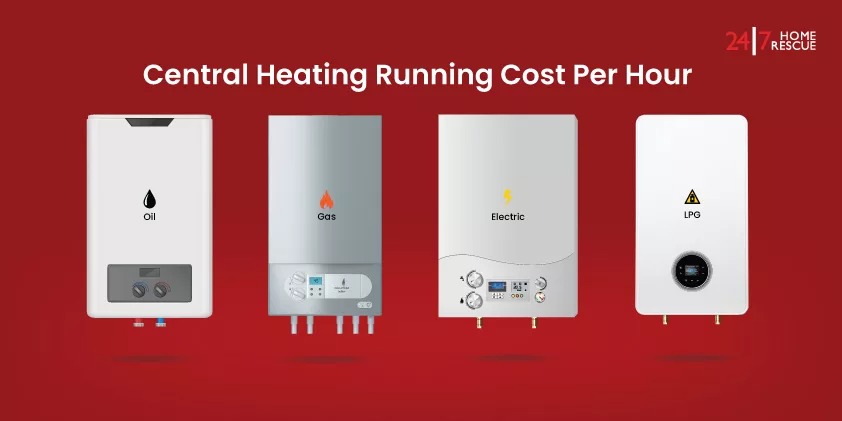
The standard fuel source to run your central heating system in the UK is gas if you are connected to a mains gas supply. Although it is the cheapest fuel source for heating, it has the highest CO2 emissions.
To determine the cost to run central heating per hour , you must consider additional factors, such as your home’s size, the number of people, and the number of rooms requiring heating and hot water. Also, consider which appliances require gas and how often you use them. Additionally, the primary factor is your boiler’s kilowatt output rating.
Considering all these factors, the running cost of running central heating per hour is 5.93 pence per kilowatt hour (kWh) and a daily standing charge of 29.80 pence, equating to an additional 1.2 pence per hour. Now, let’s say you have a 26-kWh system boiler, providing heating to 3–4 bedrooms and hot water to 2–3 bathrooms. Then, expect to pay somewhere around £1.54 (kWh).
Note: Price information is correct as of the January 2026 price cap.
To calculate the running cost of your gas central heating system, use this gas calculator: https://www.sust-it.net/gas-calculator.php.
Running Cost of the LPG Central Heating System per Hour
If you are not connected to a gas mains supply, another option for central heating in your home is LPG (liquid petroleum gas). The running cost of an LPG-fuelled central heating system will be £15 per kilowatt-hour. Compared to gas, LPG will be cheaper per hour over the long term due to its energy efficiency. However, converting to LPG as a fuel option will cost more.
This is because you will need a storage tank, which requires both capital and space. Expect to pay between £60 and £70 per year to rent an above-ground LPG tank, and between £120 and £150 per year for underground tanks.
Also, remember that installing an underground tank will incur an additional £1,500 cost. Let’s say you have a 24-kW boiler. The running cost for your LPG boiler will be £3.60 (kWh).
Note: Price information is correct as of the January 2026 price cap.
Running Cost of an Oil-Fuelled Central Heating System per Hour
Another fuel option, like LPG, is oil. The reason is the same: It is a viable option if you are not connected to a gas network. The running cost of an oil-fuelled central heating system will be around 11p per kilowatt-hour, meaning that if your boiler is 30 kWh and it runs for, let’s say, 5 hours, then the cost you will be paying per day will be £16.50. It is cheaper than LPG, but less environmentally friendly. Compared with LPG and gas, it has higher carbon emissions.
To store oil, you’ll need a tank and have it refilled at least once a year. The oil boiler will be installed by an OFTEC (Oil Firing Technical Association) registered engineer, which will cost more than an LPG boiler, which a Gas Safe registered engineer will install.
Note: Price information is correct as of the January 2026 price cap.
Running Cost of an Electric Central Heating System per Hour
Lastly, if you are not connected to a gas network, electricity is another viable option to run your central heating system. Although it is the most expensive option compared to gas, oil, and LPG, it costs 27.69 pence per kWh, with a daily standing charge of 53.68 pence. If you have a 30 kW boiler, the cost to run your electric central heating system will be around £8.31 per hour.
But in terms of performance, electric boilers are way more efficient, having an efficiency rating of 98% compared to a boiler’s 90%. Also, electric boilers have a longer lifespan of 20–25 years, whereas gas boilers have a lifespan of 10–15 years.
Moreover, electric boilers are an ideal choice for reducing your carbon footprint. Overall, there are numerous advantages and some disadvantages. So, it will depend on you and your budget
Note: Price information is correct as of the January 2026 price cap.
Read more about: Electric vs Gas boilers
Basic Formula to Calculate Your Energy Consumption
Above, I have listed the hourly cost of running your central heating system for different fuel types. For simplicity, you can use a basic formula to calculate energy consumption yourself.
Calculation:
The size of your boiler, in kWh, multiplied by the fuel type’s cost per kWh, divided by 100, gives the central heating cost per hour for different fuel types.
E.g., boiler output (24 kWh) x gas per hour (5.93 pence) = 142.32/100 = £1.42 per hour.
The Running Cost of your Central Heating System Per Year
Now, to give you an estimate, I will be mentioning the yearly cost of running your central heating system for different fuel types:
| Fuel Type | Energy Price Unit (pence per kWh) | Estimated Annual Consumption (kWh) | Adjusted Consumption (kWh) | Total Cost Per Year (£) |
|---|---|---|---|---|
| Gas | 5.93 | 13,500 | 12,150 (90% efficient) | £72,079 |
| Oil | 11 | 13,500 | 12,150 (90% efficient) | £133,650 |
| LPG | 15 | 13,500 | 11,787.5 (87.5% efficient) | £176,812 |
| Electricity | 27.69 | 13,500 | 13,230 (98% efficient) | £366,339 |
Note: The above-mentioned prices and energy output consumption are just estimates. These values can vary significantly depending on factors like house size, insulation levels, and consumption patterns.
Boiler Insurance You Can Trust
Get boiler breakdown and landlord cover including free annual boiler service.
Choose your policy type
Which fuel source is cheaper to run a central heating system?
As mentioned above, gas is the cheapest fuel to heat your home. However, there are certain advantages and disadvantages for every fuel type. Also, if you live in an area where you are not connected to a gas grid network, then alternative options are:
- LPG
- Oil
- Electricity
- Air-source heat pumps
- Ground-source heat pump
Additional factors affecting the central heating running cost
Apart from fuel, various factors affect the cost of running a central heating system:
- The types of boilers you have include system, combi, and regular boilers.
- Size of your home: the number of bathrooms, rooms, and people who require heating.
- Energy consumption in your home.
- The size of your boiler in terms of energy output depends on your home’s size.
Tips to Lower the Cost of Your Heating Bills
- Maintain your boiler and get an annual boiler service. This will ensure that your boiler remains in optimal condition for longer.
- Improve your home’s insulation, including doors and windows, so that heat doesn’t escape your home.
- Compare the tariff rates of different utility providers in your area and try to find the cheapest option.
- Adjust the temperature settings in your home and keep the temperature low in rooms that do not require that much heat.
- Install the Utrack mobile app, through which you can connect to your smart metre, track your hourly energy usage, and understand your energy consumption to adjust accordingly.
Conclusion
So here you have it. You now know the cost of running a gas central heating system and running a central heating system on other fuel types. Also, you are now aware of the factors that affect the cost of your energy bills, plus tips to lower them.
If you still have any queries, please contact us on 0345 3192 247, and one of our representatives will assist you on the call.

Central Heating System
Keep your home warm and energy-efficient with our one-off central heating system servicing. Extend the life of your system, reduce energy bills, and avoid unexpected issues.
FAQ'S
How much does it cost to run central heating for 1 hour in the UK in 2026?
Under the energy price cap for January-March 2026, the cost of running electric central heating is 27.69 pence per kWh.
The cost to run a gas central heating system is 5.93 pence per kWh. For other fuel types, the central heating running cost is 15 pence per kWh for LPG and 11 pence per kWh for oil.
What is the best temperature for central heating?
The ideal temperature for your central heating system should be between 18°C and 21°C. This temperature range creates a sweet spot, which keeps you warm and limits your rising energy bills.
How many hours a day should central heating be on?
Your central heating system should be on for 8 hours a day in colder months. You can turn it on for 10 hours if you require it; otherwise, to keep your energy bills down and your home warm and comfortable, it is suggested that you keep it on for 8 hours.
At 24|7 Home Rescue, we aim to keep our blogs accurate and helpful at the time of publication. However, details such as images, services, or product information may change. Content is for general information only and not professional advice. For the latest updates, please review our Terms & Conditions or contact us directly. 24|7 Home Rescue accepts no liability for actions based on outdated or incomplete content. Our team is always happy to help with any questions. The information provided in this article has been collected from various sources. However, we suggest you consult a certified Gas-Safe Engineer in your area before making any decisions, as every individual’s home situation is unique.
Recent Posts

Popular Posts

24 Mar, 2015


13 Apr, 2015
Related Posts
How to Free a Stuck Diverter Valve: A ...
02 Mar, 2026