Combi Boiler Flow Rate Explained: A Homeowner’s Guide
A combi boiler provides both central heating and hot water directly, without the need for a separate water tank. An important aspect of choosing a combi boiler for your home is its flow rate.
Many homeowners encounter this phenomenon only when they notice low water pressure or when hot water doesn’t come out of multiple taps when used at once.
This is why choosing a combi boiler with the correct flow rate for your home is important. In this blog, we’ll discuss the different aspects of boiler flow rate to help you make an informed decision.
Key Takeaways
- A combi boiler’s flow rate is the amount of hot water it can deliver in a minute.
- A combi boiler’s flow rate is different from water pressure.
- There are various combi boiler flow rates depending on their LPM (Litres Per Minute).
- A booster pump and an accumulator can be used to improve your combi boiler’s flow rate.
- Depending on various aspects, you can choose the most suitable flow rate combi boiler.
- An LPM of 10-15 can be enough for most households in the UK.
What is a Combi Boiler Flow Rate
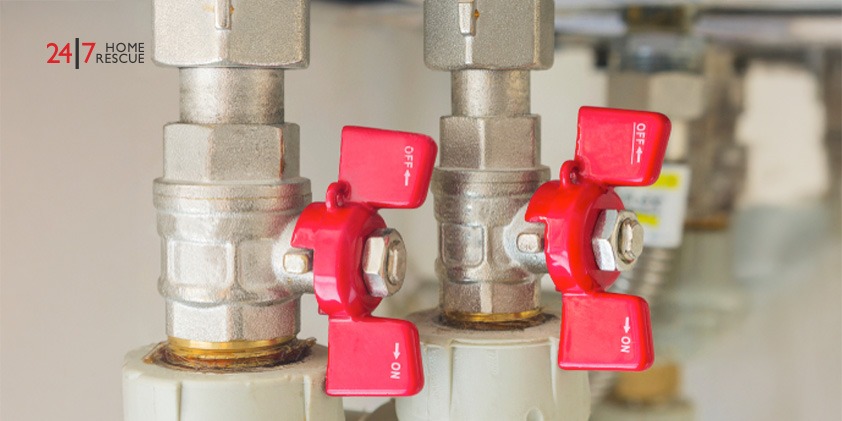
A combi boiler’s flow rate is the amount of hot water it can deliver per minute. It is usually measured in litres per minute. For instance, a boiler with a 5 LPM flow rate can deliver 5 litres of hot water every minute.
A combi boiler’s hot water flow rate determines:
- The intensity of water pressure in your shower
- How easily can you run multiple taps at once
- Your comfort while using a hot water shower
- How quickly taps fill your baths
To be precise, the higher the flow rate, the more consistent the hot water supply will be.
How Does a Combi Boiler Produce Hot Water?
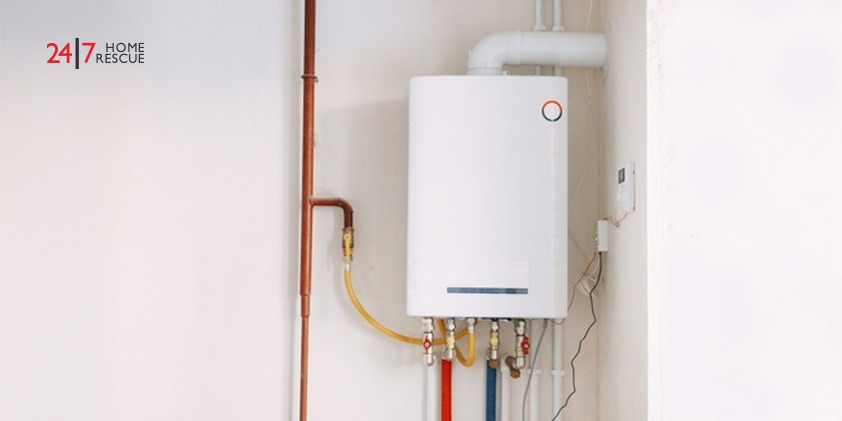
A combi boiler works differently compared to a traditional central heating system. It provides instant water. Here is how a combi boiler produces hot water:
- The user opens a hot water tap
- Cold water is transferred into the boiler
- The heat exchanger warms the water instantly
- How water comes out directly to your shower or tap
Since there is no storage tank, the boiler heats water instantly, and its capacity determines how much hot water it can deliver per minute.
Typical Combi Boiler Flow Rates
| Boiler Size | Typical Flow Rate | Suitable For |
|---|---|---|
| 24 kW | 9-10 LPM | Small flats, 1 bathroom |
| 28kW | 11-12 LPM | Small homes, 1 bathroom |
| 30-32kW | 12-14LPM | Medium homes |
| 35kW | 14-16LPM | Larger homes |
| 40kW+ | 16-18+ LPM | Homes with multiple bathrooms |
Note: These numbers can differ slightly according to your boiler manufacturer however, they do provide an understanding of boiler flow rate suitable for different household sizes.
Importance of Flow Rates for Combi Boilers
The flow rate affects the comfort of your home. Here are some aspects which are influenced by your combi boiler’s flow rate:
- Low flow rates can cause weak showers, especially if there are multiple people using water in your home at the same time.
- If there are two taps running simultaneously, a boiler with low-flow water can reduce pressure and hot water intensity.
- A higher flow rate fills your baths faster, which saves a lot of time and minimises heat loss.
- Multiple people in a household can benefit from a boiler with a high flow rate, as the intensity of hot water remains the same.
If your boiler flow rate is too low and these issues occur frequently, you might need a professional boiler repair, or your system may be undersized for your home.
Difference Between Flow Rate and Water Pressure
People often confuse flow rate with water pressure. Here is how they differ.
Water Pressure
Water Pressure in a combi boiler system is the force that pushes water through the pipework. This water pressure is usually measured in bars. The ideal water pressure for a combi boiler to work efficiently is 1-1.5 bar when cold.
If the water pressure is below this level, the boiler may not function properly and may shut down or display error codes. On the other hand, higher pressure can wear down your components fast and even cause leaks.
Flow Rate
Flow rate is the amount of water delivered over a given period. This is usually measured in litres per minute (L/min). The flow rate in a combi boiler determines how much hot water is accessible from your taps or showers at once.
A higher flow rate determines how strong and stable your water output is when multiple outlets are open at once. A lower flow rate means a weaker water delivery, even if your system pressure is normal.
To summarise, water pressure is the force which pushes the water and flow rate is the volume of water coming out.
How to Improve Combi Boiler Flow Rate
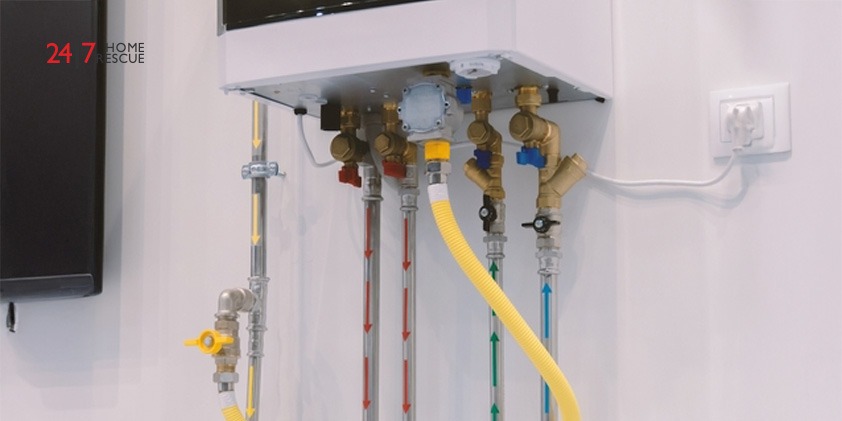
Here’s how you can improve your combi boiler flow rate if you’ve installed a combi boiler and the pressure seems insufficient:
Booster Pump
A booster pump can increase the water pressure coming into your home. It pushes water through pipes with greater force, helping the boiler maintain a consistent hot-water supply. It’s a great option for buildings that have low mains pressure or multiple floors.
Accumulator
An accumulator is a water storage tank designed to maintain water pressure and improve flow consistency. Instead of continuously pumping water, it stores water under pressure using an internal air bladder or cushion.
This releases water when taps are opened to maintain a seamless flow and reduce pressure drops. In combi boiler systems, an accumulator helps prevent sudden fluctuations in water pressure and minimise strain on pumps and pipework.
Boiler Service
Regularly servicing your boiler helps maintain performance and ensures a consistent hot water flow rate year-round. A boiler service can also keep your boiler in perfect working condition and help you avoid any unexpected boiler breakdowns.

Boiler Service
Ensure your boiler runs efficiently and safely with our professional boiler servicing. Regular maintenance will save you money in the long run and potentially prevent breakdowns.
What is a Good Flow Rate for a Combi Boiler
Flow rates for combi boilers can be categorised by their litre-per-minute levels. Here are different combi boiler flow rates explained based on their LPM level:
Low Flow Rate (10 LPM at most)
This minimum flow rate for combi boilers delivers up to 10 litres of hot water per minute. It is typically enough for small homes with one bathroom and low water demand. These low-flow-rate boilers are significantly more energy-efficient because they use less water and power. Also, they are more compact and cost-effective, which makes them a good choice for smaller properties or for people looking for a budget-friendly solution.
The downside of a low-flow-rate boiler is its limited water usage. This means that if more than one tap is in use, the water temperature can drop or the flow can reduce significantly. This is quite frustrating for busy households with constant demand for hot water.
Medium Flow Rate (10-15 LPM)
This type of boiler is suitable for medium-sized homes with moderate hot water demand. These boilers are designed to balance efficiency and performance and are a good choice for homes with two bathrooms and considerable water demand.
While these boilers can better manage continuous water demand than low-flow-rate boilers, performance drops may still occur during peak usage times.
High Flow Rate (15 or more LPM)
High-flow-rate combi boilers can produce more than 15 litres of hot water per minute. This makes them a good choice for large households with higher-than-average water demands. The main benefit of a high-flow-rate boiler is its ability to maintain a consistent water supply while serving multiple taps or showers.
High-flow-rate boilers are generally more expensive and larger. This means you’ll need significant space to install them. Also, they can be less energy-efficient when hot water demand isn’t high.
Selecting the Best Flow Rate for Your Combi Boiler
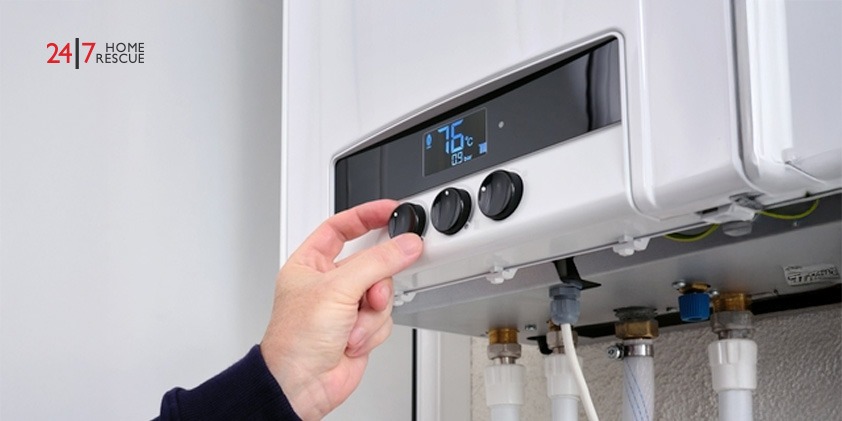
Looking for a combi boiler for your home? It is essential to consider several factors:
Daily Water Usage:
This comes down to how much hot water is used every day. It also involves multiple tasks at once, like washing the laundry and taking a bath.
Size of your Household
This involves the number of people in the house. For instance, if there are more than 5 people in your household, you’ll need a boiler with a high hot water flow rate.
Quantity of Bathrooms
The number of bathrooms significantly affects the flow. This also involves factors such as the size of the baths and the number of showers, all of which depend on a high flow rate.
Household Supply Pressure
The flow rate you desire from your boiler must match the incoming water supply rate. If the incoming flow rate is low, choosing a boiler with a low flow rate is better. However, you can always opt for an accumulator or booster pump.
Conclusion
Having in-depth knowledge about a combi-boiler’s flow rate is essential for choosing one for your home. Remember to check your bathroom size, household size, daily water usage, and household supply pressure to select an ideal boiler that meets your everyday needs. Boiler cover ensures you have easy access to our 24 hour helpline and even an engineer should you need it when you have difficulties regulating the hot water rate.
At 24|7 Home Rescue, we aim to keep our blogs accurate and helpful at the time of publication. However, details such as images, services, or product information may change. Content is for general information only and not professional advice. For the latest updates, please review our Terms & Conditions or contact us directly. 24|7 Home Rescue accepts no liability for actions based on outdated or incomplete content. Our team is always happy to help with any questions.
Recent Posts

13 Feb, 2026
Popular Posts

24 Mar, 2015


13 Apr, 2015