Radiators not working? Here Are Some Probable Causes and Their Fixes
Did your boiler radiator suddenly stop working? There can be many reasons behind this: cold radiators, airlocks, sludge and debris buildup, etc.
Your home’s peace can be heavily disturbed if one or more radiators aren’t distributing heat properly. Plus, don’t forget the high repair bills coming your way.
But don’t worry; in this blog, I will tell you the top 9 reasons why your radiator is not working correctly.
You can solve some of these issues on your own, but others will require a qualified expert’s help. So, let’s discuss the reasons!
Before we start, inspect where the problem lies!
First, you must inspect the issue in detail to solve it. Check your central heating system by turning it on and observing whether the problem is occurring in one radiator only or multiple radiators. After successfully inspecting the issue, follow our guidelines mentioned below:
Reasons Why Your One Radiator Is Not Working
If one radiator in the house is not working, perform the quick checks below.
You might be able to solve the problem without a professional; however, some checks will require you to contact a qualified gas engineer due to the problem’s technicality and severity.
1. Blockages in the radiator due to the buildup of sludge and debris
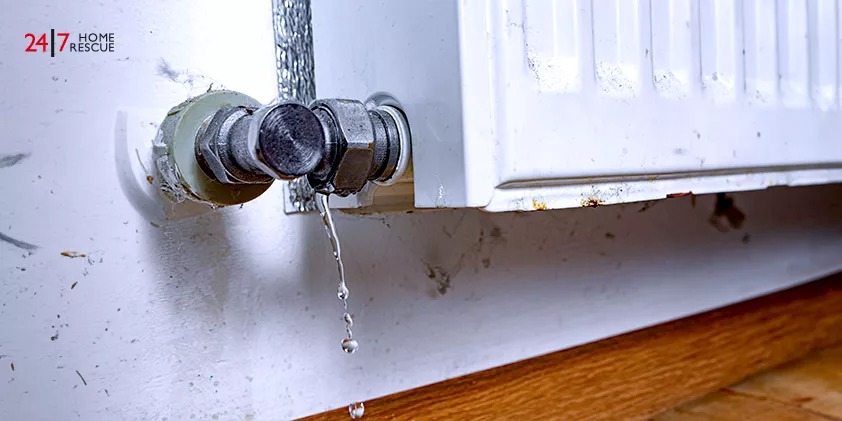
A common issue many people face is a radiator that is cold at the bottom, resulting in poor heat distribution in their homes.
The reason behind this problem is sludge and debris. The buildup of sludge and debris is due to your radiator getting old; with time, the rust builds up, and through pipes, it enters the system, where it combines with dirt, forming a thick, gooey liquid known as sludge.
Fix:
To solve this problem, you must powerflush your central heating system. A professional can only perform the power flush, so you must contact a certified engineer.
The engineer will power flush your system by connecting a powerful pump to the radiator’s head, circulation pump, and tail. Through the pump, the engineer circulates water and cleaning agents throughout your system to remove all the debris and sludge causing the blockage.
2. Airlock in your radiators
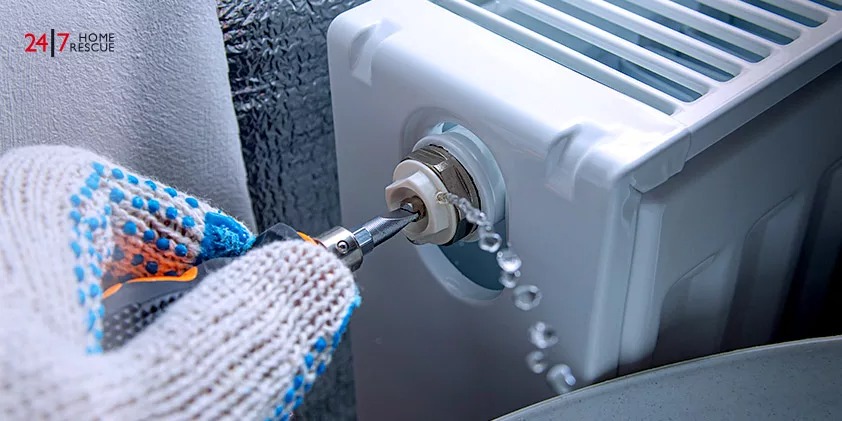
Another issue that most homeowners face with their radiator is that it gets cold from the top, not the bottom. The reason behind this problem is trapped air in your radiators.
An airlock in your central heating system is caused by water vapour being trapped in your system when your boiler heats the water. These vapours are not as dense as water and can be easily trapped in the system, restricting the flow of hot water to your radiators.
Fix:
The airlock problem can be solved yourself. All you need to do is bleed out your radiators. To start the bleeding process, you must loosen the bleed valve with the help of the bleeding key.
As soon as you turn it a quarter clockwise, you will hear a hissing sound, indicating that the air has been removed. After that, check your boiler’s pressure; if it is below 1.5 bars, you must re-pressurise it via a filling loop.
3. A leaking radiator
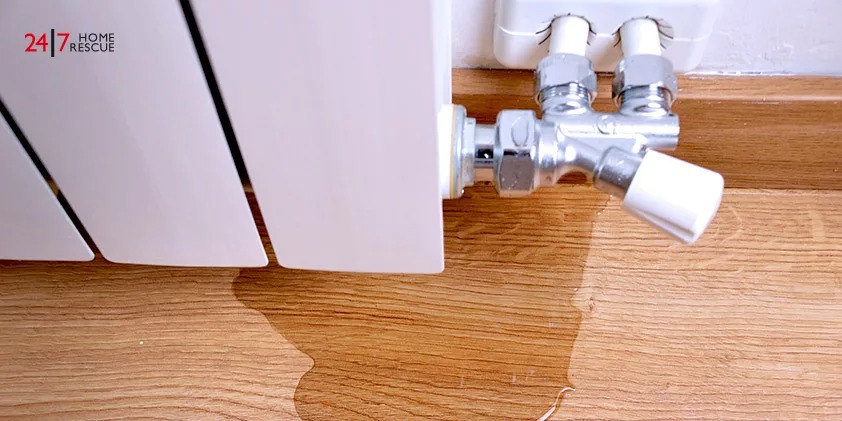
Leakages are among the most important and alarming reasons your central heating radiator is not working. A leaking radiator can irritate and disrupt the heating flow around your home.
The reasons for leakages are multiple; read our blog: My radiator is leaking water. But the common cause of heavy leakages in your radiator is corrosion as your radiator gets older and is not maintained and cleaned regularly.
Fix:
Sometimes leakage problems can be solved by tightening the nut on the pipe connecting to the thermostatic radiator valve (TRV). But sometimes the leakage is heavy and does not stop, indicating that you might need to replace your radiators.
However, if the leakage does not stop, immediately contact a Gas Safe engineer and consult him before making any decisions.
4. Problems with the TRV
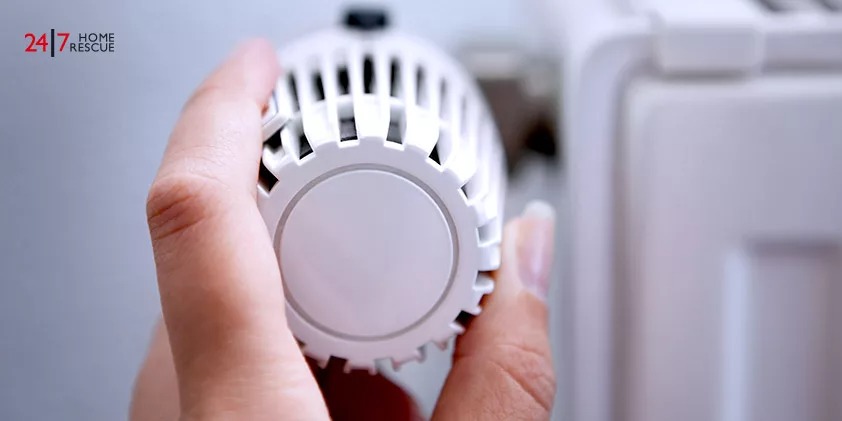
If you aren’t facing any of the problems mentioned above, then the issue might be related to the TRV of your radiator. Sometimes TRV seizes to a closed position when the temperature ratings are too high.
Fix:
In this situation, you can carefully remove the cap of your valve, locate the knurled nut, and undo it by hand. Do not remove any additional nuts on the valve because doing so could cause hot water to unexpectedly spill on you and burn your skin.
After removing the covering cap, find the pin in the centre and check whether it is moving freely or not. If it is stuck, then try releasing it by gently tapping it. If it is still stuck, you must replace the valve entirely. Although it is suggested that before doing that, contact a gas-safe certified professional, let him check the valve, and follow his advice.
Reasons Why Some Radiators Are Not Working
Some radiators not working in your boiler is a problem that can be solved by just checking for a few issues. The drill is the same: some of these problems can be solved by you, and some will require a professional. Let’s move on to the issues.
1. A problem with the central heating controls
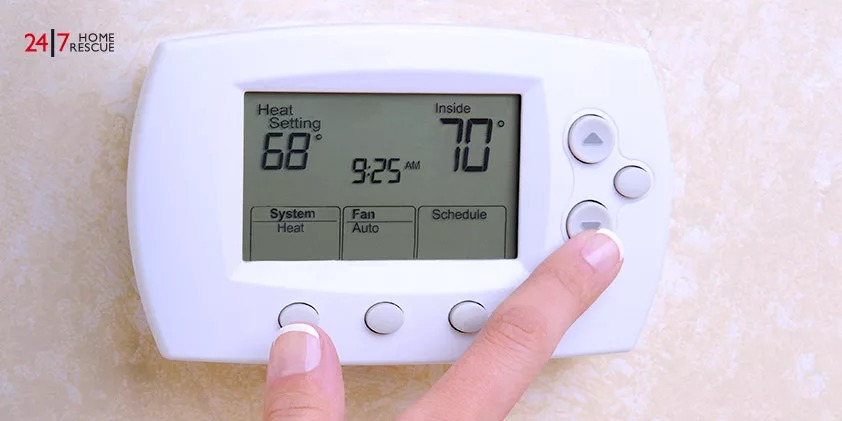
Sometimes the problem behind your non-functioning radiators is related to a central heating control panel fault. This is rare and can be observed when your boiler is working fine and the pressure is also set correctly within limits, but still, the radiators are not coming on.
The control panel is crucial in setting the timing and sending signals to your boiler to heat the water. If the control panel does not function properly, signals won’t be sent to the boiler as to when to heat the water, resulting in no flow of hot water to your radiators.
Fix:
You can check that the timing control is proper and select demand to ‘on’ to ascertain if that will heat your radiators. Other than those checks, it is strongly recommended you do not alter or attempt to investigate faults with the control panel or seek professional assistance.
To check whether the control panel is working correctly, check the timing and select “on” to see whether doing this heats your radiators. I highly suggest not going beyond these checks and altering the control panel setting, as it is a technical matter that is best left to an expert.
2. Problems with the central heating system
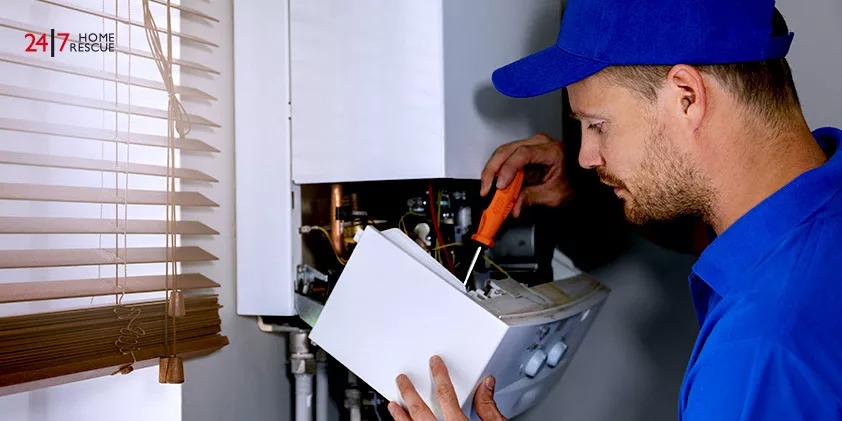
If the control panel is working fine and your radiators are not cold but multiple radiators are not heating up, the problem could be severe and related to your central heating system rather than your radiators.
Fix:
Check whether your central heating system’s components are working fine; this includes checking on your boiler’s pressure, your central heating pump, and strange noises from your central heating system. If the answer to any of the problems mentioned above is yes, contact an expert immediately!
3. Low boiler pressure problems
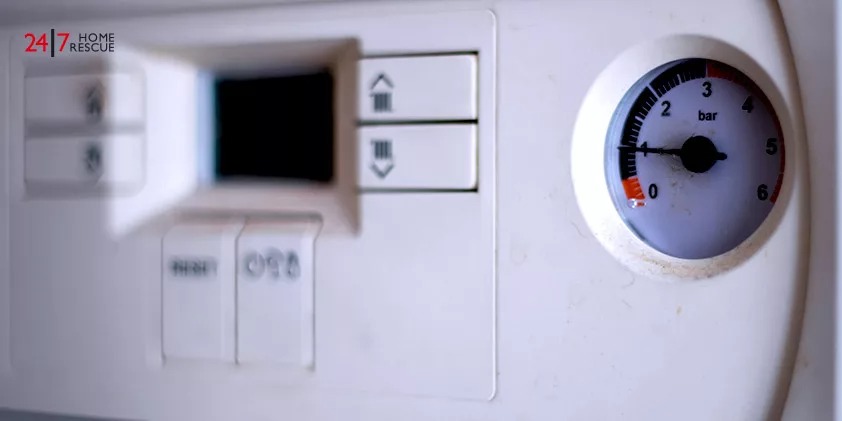
Low boiler pressure is one of the most common reasons your radiator is not working correctly. Generally, the combi boiler’s pressure should be between 1 and 2 bars. If the pressure ratings are below that, your boiler will not provide your radiators with enough hot water to distribute heat around your home.
Fix:
Make sure the pressure rating is between 1 and 2 bars (recommended: 1.5 bars). If it’s below that, then increase the water pressure by turning on the top-up valve, allowing the necessary amount of water to increase the pressure. Ensure you don’t fill it with more water than required, and close the valve when re-pressurising your boiler.
4. Faulty Diverter Valve
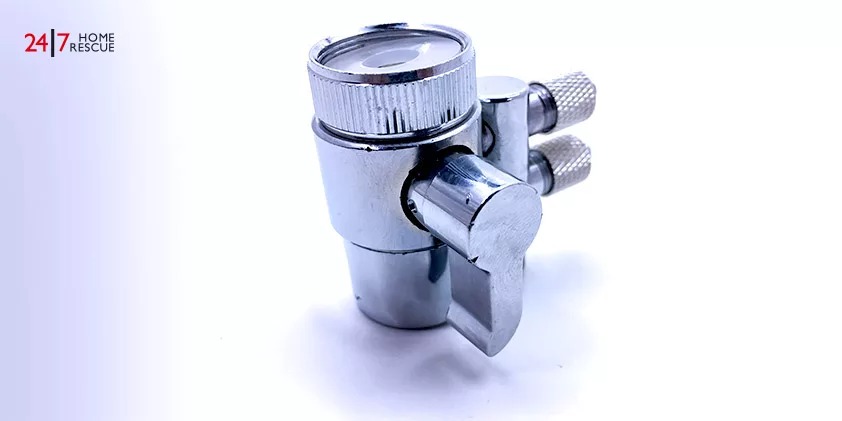
Now, let’s say your controls are working correctly and you have fixed the pressure problem by following the tips above. However, there is still no hot water reaching your radiators, even though you are getting hot water at your taps. In this case, the problem may be related to your diverter valve, which has become faulty.
Found in combi boilers, A diverter valve is a motorised valve responsible for automatically shutting down the water flow to your radiators and redirecting it to your taps when you use it for hot water.
Fix:
The only solution to this problem is to contact a GasSafe engineer, as the diverter valve is a crucial component. If something goes wrong while you’re trying to fix it yourself, your central heating can be compromised.
5. Unbalanced Radiators
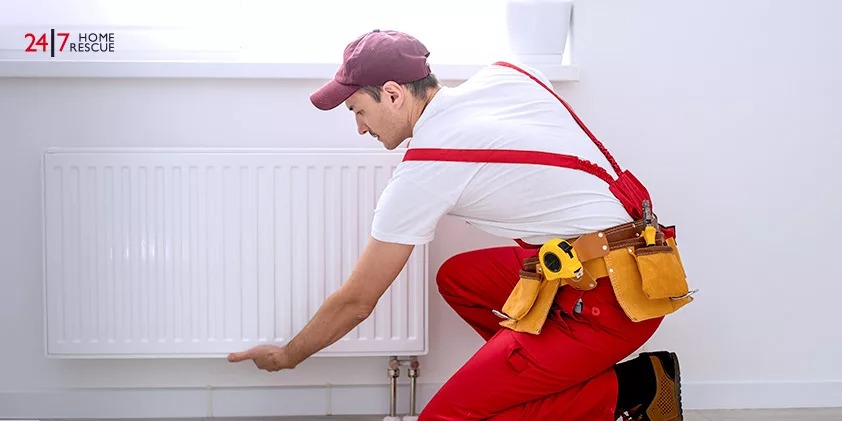
Lastly, unbalanced radiators are the most common cause of your radiators not heating up. Some radiators in your home are near your boiler, and some are far away. The radiators found farthest away might not receive enough hot water to distribute heat around your home. The result is that some rooms get hot enough, and some do not. This doesn’t mean your radiators aren’t working, but the hot water is. It means that water isn’t reaching the farthest radiators, which means that you have unbalanced radiators.
Fix:
To solve this problem, you will need to balance your radiators. Balancing radiators is not that complex and can be done by yourself. But you will need to follow a step-by-step process. To learn about the process, read our blog, How to Balance Your Radiators.
One Radiator Not Working in One Room
If the radiator is not working in one room, it often means there is a local issue as opposed to problems with the whole heating system.This can happen for a variety of reasons, such as trapped air preventing hot water from circulating, a thermostatic valve issue, sludge buildup, or an incorrectly balanced lockshield.
Conclusion
After reading this article, I hope the question “Why is my radiator not working?” has been addressed. If you are still experiencing problems with your heating system, contact us at 0345 3192 247, and we will assist you with your queries. Plus, visit our blog sections to find a range of posts on radiators.
At 24|7 Home Rescue, we aim to keep our blogs accurate and helpful at the time of publication. However, details such as images, services, or product information may change. Content is for general information only and not professional advice. For the latest updates, please review our Terms & Conditions or contact us directly. 24|7 Home Rescue accepts no liability for actions based on outdated or incomplete content. Our team is always happy to help with any questions.
Recent Posts

07 Sep, 2026
27 Aug, 2026
Popular Posts
24 Mar, 2015


13 Apr, 2015
Related Posts